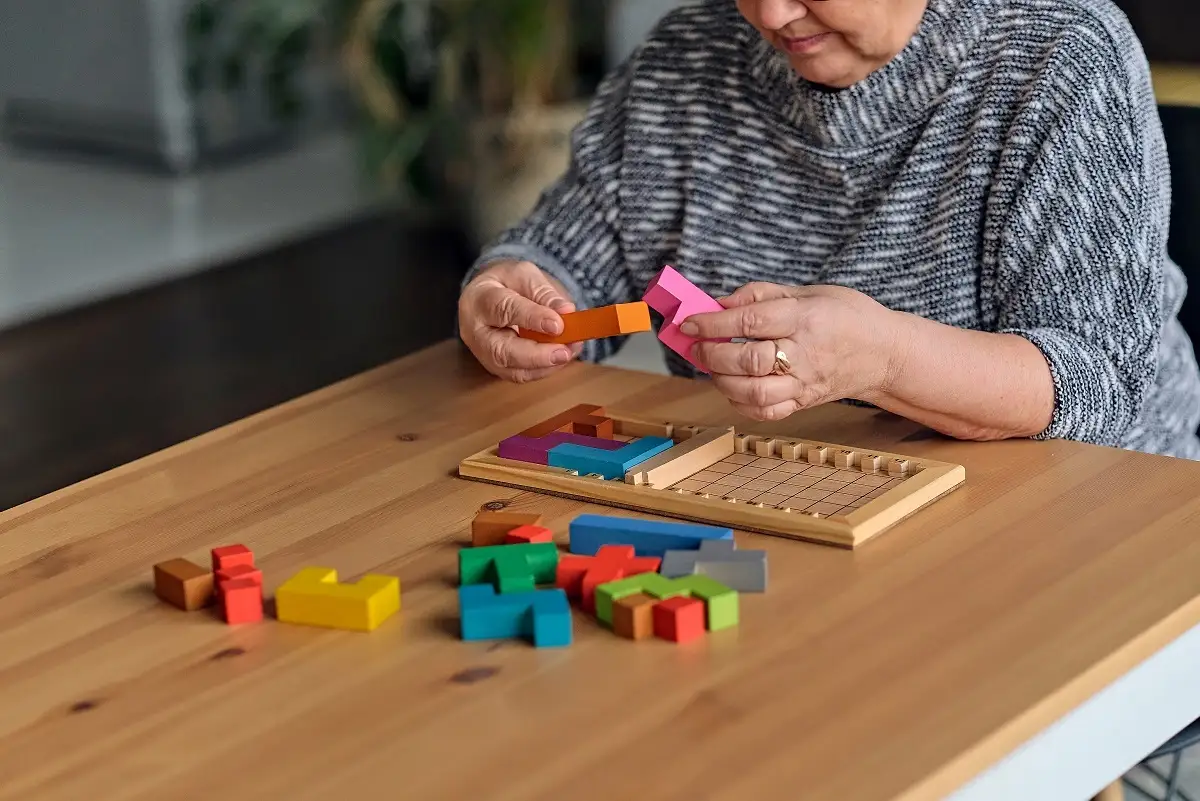
Ask most people when they stopped learning and they will tell you they haven't. Ask them when they last made a deliberate effort to understand something they didn't need to know for work, for an exam, or for any practical purpose — and the pause before they answer often speaks for itself.
The distinction matters. There is learning that happens because life demands it, and there is learning that happens because something in us wants to know. The second kind — curiosity-driven, open-ended, nobody's asking for it — is arguably the more important of the two. It is also the kind that tends to fade as we move through adulthood, unless we make a deliberate effort to protect it.
This article is about that second kind of learning: where it comes from, what happens to it over the course of a life, and why investing in it is one of the more worthwhile things a person can do.
What Curiosity Actually Is
Before we can talk about nurturing curiosity, it helps to be clear about what it is. Psychologists broadly distinguish between two forms. The first is what researchers call "diversive curiosity" — the low-level, novelty-seeking form that makes you pick up a magazine you've never read, or click on a story with an unexpected headline, or stop to watch a street performer. It's the curiosity of the easily bored, and while it isn't unimportant, it tends to be shallow and short-lived.
The second form is "epistemic curiosity" — the deeper, more sustained drive to understand, to grasp how and why things work, to fill in the gaps in one's own knowledge. This is the curiosity that makes someone spend an afternoon researching the history of a single idea, or read extensively about a subject that has no obvious connection to their daily life. It is the engine of genuine intellectual development.
Both forms are present in most people. The question is which one we feed most consistently — and what happens to epistemic curiosity if we don't feed it at all.

The Education System and the Curiosity Gap
Children are, almost universally, highly curious. Developmental psychologists estimate that children between the ages of two and five ask an average of over a hundred questions per day. Not all of these questions are meaningful — "why?" chained to the previous answer indefinitely is more a social game than genuine inquiry — but the underlying impulse is genuine and vigorous.
What happens to that impulse as children move through formal education is a subject of considerable debate. Many researchers and educators have argued that structured schooling, particularly in its more rigid forms, inadvertently trains curiosity out of children by replacing open-ended exploration with performance-oriented learning. When knowledge becomes primarily something you are tested on and marked for, the intrinsic pleasure of simply wanting to know can begin to erode.
This isn't an argument against education or testing — it's an observation about emphasis and balance. The most effective educational approaches tend to preserve space for genuine inquiry alongside the structured acquisition of knowledge. Curiosity and rigour are not in conflict; they are complementary. The challenge is to design learning environments that honour both.
"The important thing is not to stop questioning. Curiosity has its own reason for existing."Commonly attributed to Albert Einstein
Curiosity Through Adulthood
For adults, the conditions that support curiosity are somewhat different from those in childhood. Time pressure, professional responsibility, and the sheer quantity of information competing for attention all make it harder to sustain the open, exploratory mindset that curiosity requires. It is also, frankly, easier to consume entertainment than to engage with ideas that require effort.
And yet the adults who continue to learn throughout their lives — not because their job requires it, but because they genuinely want to — tend to describe the experience in very similar terms: it keeps them engaged with the world, it introduces them to unexpected connections, and it makes them feel, as one person memorably put it, "more alive to things." That is not an insignificant claim.
Research on cognitive reserve — the brain's resilience against age-related decline — consistently shows that sustained intellectual engagement across a lifetime is associated with better cognitive outcomes in later years. While no activity can guarantee immunity from dementia or other conditions, the cumulative effect of decades of active, curious learning appears to build a genuine buffer. The brain, like most organs, benefits from being used.
What Cultivates Curiosity
If curiosity is partly a habit — a way of approaching the world — then it can, at least to some degree, be cultivated. Several practices seem to reliably support it.
The first is exposure to adjacent domains. Curiosity often ignites at the boundaries between disciplines — when a biologist reads a book about economics, or an engineer encounters philosophy. These cross-disciplinary encounters have a particular quality: they reveal that the same questions appear in different contexts, which is itself a kind of discovery.
The second practice is maintaining a list of things you don't understand. This might sound almost absurdly simple, but the act of noticing and recording your own ignorance is genuinely useful. It creates a kind of personal curriculum of open questions, and open questions have a way of drawing your attention when relevant material appears.
Third — and this is where tools like AC Quiz come in — is the regular practice of encountering facts and ideas outside your usual domain, in a format that invites engagement rather than passive consumption. A quiz is, at its best, a way of noticing what you don't know and immediately finding out. That sequence — notice, wonder, discover — is the basic rhythm of curious learning.
The Connection Between Curiosity and Meaning
There is a more philosophical dimension to all of this that deserves at least a brief mention. Curiosity is not simply a cognitive strategy for better learning, though it is that. It is also a way of relating to the world — an orientation towards life that treats the world as fundamentally interesting, and one's understanding of it as permanently incomplete in a way that is interesting rather than distressing.
People who maintain active curiosity throughout their lives tend to have a particular relationship with not-knowing. Rather than finding ignorance embarrassing or threatening, they experience it as an invitation. They are comfortable saying "I don't know" and genuinely meaning "but I'd like to." That psychological stance — comfortable with incompleteness, oriented towards discovery — is associated not just with better learning but with broader measures of life satisfaction.
None of this is about becoming a more impressive conversationalist at dinner parties, though that may be a pleasant side effect. It's about maintaining an active relationship with the world — a sense that there is always more to understand, always more to encounter, and that the distance between what you know now and what you might know later is a space worth crossing.
The Simple Act of Asking
The most fundamental practice of curiosity is also the easiest to describe and the easiest to forget: asking questions. Not just answering them when asked, not just nodding along when someone makes a claim, but genuinely wondering — about the history of ordinary things, about the mechanisms behind familiar phenomena, about the reasons behind decisions you've always taken for granted.
Why does a week have seven days? Where does the word "quiz" itself actually come from? Why do we shake hands to greet people, and when did that start? These are not urgent questions. But they are questions, and the habit of asking them — small, frequent, genuine acts of wondering — is the seedbed of everything else.
The curious adult is simply someone who kept asking, even when nobody was marking the answer.